


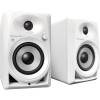
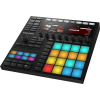
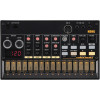
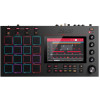


















There is something interesting happening in music right now.
A DJ can play a song from 2002, 2005, or 2008 and watch an entire room immediately react.
People know the opening seconds.
They know the hook.
They remember the verses.
Sometimes they know every word.
Then you can play a song that was everywhere two years ago, and somehow it already feels old.
That raises an interesting question:
Why don’t songs seem to last the way they did in the 2000s?
This isn't about saying music was automatically better twenty years ago.
Great music is still being made.
There are incredible artists, producers, musicians, engineers, and songwriters working today.
The bigger issue may not be the quality of the music at all.
It may be the environment surrounding it.
The way songs are produced has changed.
The way they are released has changed.
The way we discover them has changed.
And most importantly, the way we consume music has completely changed.
Maybe songs aren't becoming less meaningful.
Maybe we simply aren't giving them enough time to become meaningful.
Music Used to Have More Time
Think about how someone discovered music in the early 2000s.
You might hear a song on the radio.
Then you would see the video on MTV, BET, VH1, or another music channel.
Maybe your friend burned it onto a CD.
Maybe you bought the single.
Maybe you bought the entire album.
A DJ played it at the club.
You heard it at school.
Someone played it in their car.
Then the artist released another single from the same album three months later.
The original record was still around.
Music moved slower.
A song could live for months before the culture completely moved on.
Today, music can explode almost overnight.
A song appears on TikTok.
A clip becomes a trend.
Streams shoot up.
People make thousands of videos using the same section.
Then another song arrives.
Then another.
Then another.
The record may have become more popular faster than almost anything from twenty years ago.
But it can also disappear just as quickly.
We Have More Music Than We Know What to Do With
Streaming has given listeners access to an amount of music that would have been unimaginable during the CD era.
That is an incredible thing.
Almost every genre, generation, artist, and scene is available instantly.
But unlimited access creates another problem:
Nothing has to stay in rotation very long.
If you got tired of an album in 2003, you couldn't instantly replace it with millions of other albums.
Today you can.
Skip.
Next song.
Next playlist.
Next artist.
Next recommendation.
Next trend.
The amount of competition for a listener's attention is enormous.
Luminate described the current entertainment environment as one of personalized algorithms and nonstop content, where simply getting an audience to notice a release—and keep returning to it—is increasingly difficult.
That changes how music has to compete.
A song isn't only competing against other songs.
It's competing against TikTok.
Instagram.
YouTube.
Podcasts.
Netflix.
Gaming.
Group chats.
Sports.
Notifications.
And every other thing happening on the same device where you're listening to the record.
Songs Have Literally Become Shorter
There is also a measurable difference in song structure.
A recent academic study comparing hip-hop playlists from 2002 and 2022 found the average song length declined from approximately 4 minutes 19 seconds to 3 minutes 3 seconds. The researchers connected that shortening to broader changes in platform-based music consumption.
That is more than a minute disappearing from the average record.
Think about what can happen in that minute.
Another verse.
A bridge.
An instrumental section.
An extended intro.
A breakdown.
A longer outro.
A key change.
Another chorus.
A moment where the song simply has room to breathe.
Now obviously, longer doesn't automatically mean better.
There are terrible five-minute songs and incredible two-minute songs.
But the reduction tells us something about how the format itself is changing.
Get to the Hook
Modern music often gets to the point quickly.
Sometimes the vocal arrives almost immediately.
Sometimes the hook appears before the listener has even had time to settle into the record.
There is logic behind that.
Spotify, for example, officially counts a song stream after a listener has played the track for at least 30 seconds. That doesn't mean every producer is sitting in the studio writing music around Spotify's accounting rules, but it does illustrate the environment songs now live in: listener retention matters immediately.
There is pressure to grab attention.
Fast.
Don't lose the listener.
Don't make the intro too long.
Get to the recognizable part.
Give people something they can use for a video.
Give them the hook.
Keep the record moving.
Again, none of that is automatically bad.
Great producers have always understood the importance of grabbing the listener.
But when every decision begins with the question:
“Will people skip this?”
instead of:
“Does this make the song better?”
those priorities can eventually create very different records.
What Happened to the Bridge?
Listen closely to many major records from the 1990s and 2000s.
Song structure could be surprisingly elaborate.
Intro.
Verse.
Pre-chorus.
Chorus.
Second verse.
Chorus.
Bridge.
Breakdown.
Final chorus.
Outro.
The bridge was especially important.
It gave the song somewhere else to go.
You had already heard the verse and hook multiple times, then suddenly the chords changed.
The singer approached the melody differently.
The production opened up.
Maybe the drums disappeared.
Maybe another instrument entered.
Then the chorus returned and suddenly felt bigger because the record had taken you somewhere first.
When songs become shorter, sections like that are easier to remove.
But removing those sections can also remove some of the journey.
Are Producers Making Songs or Moments?
This may be one of the biggest differences between the 2000s and now.
A modern producer knows that one particular moment can completely change a song's trajectory.
Maybe it's fifteen seconds.
Maybe it's the hook.
Maybe it's one lyric.
Maybe it's a beat switch.
Maybe it's the part everybody uses in a Reel.
Creating a great moment is an art.
But a great moment and a great song are not always the same thing.
Sometimes the viral section is incredible, but everything around it feels like it exists only to get the listener to that part.
That's where the question becomes interesting:
Are we producing complete records—or producing moments designed to travel across social media?
Ideally, you can do both.
But one should not have to replace the other.
Albums Changed the Relationship
The album also used to matter differently.
In the 2000s, if you bought an album because of one single, you probably heard the rest of it.
Maybe the biggest radio song wasn't even your favorite after a few weeks.
You discovered track six.
Then track nine.
Then the song your friends skipped became the one you couldn't stop playing.
Albums allowed songs to grow on you.
That matters.
Today, discovery is much more individual.
You can hear one track.
Add it to a playlist.
Never hear the album.
Never learn the producer's name.
Never hear another record from the artist.
Music increasingly reaches listeners one song at a time.
That is convenient.
But convenience can create a shallower relationship with the project itself.
We Used to Live With Records
This may be part of what people really mean when they say older music lasted longer.
We lived with it.
If you spent money on a CD, you played that CD.
A lot.
You listened in the car.
You played it in your room.
You read the liner notes.
You looked at the production credits.
You learned the album order.
You knew what song came next before the first one finished.
You didn't necessarily love every record immediately.
Some records had to grow on you.
Today, if something doesn't connect within ten seconds, another song is waiting.
Music hasn't necessarily changed because humans suddenly stopped appreciating deeper records.
Our ability to escape anything that doesn't immediately satisfy us changed.
Social Media Accelerated the Cycle
Social media has made music discovery incredibly powerful.
An independent artist can release a song from their bedroom and potentially reach millions of people without traditional radio promotion.
Old records can suddenly become hits again because of a television show, meme, dance, or viral video.
That is one of the best things about the modern music ecosystem.
But social media also moves relentlessly.
Yesterday's trend becomes today's old news.
The same song can go from unknown to unavoidable to overplayed in an incredibly short amount of time.
That speed can make success feel temporary.
A record that once might have gradually built over six months can now experience its entire cultural moment in a few weeks.
The Old Songs Aren't Actually Going Anywhere
And here's where things become even more interesting.
Listeners continue consuming huge amounts of older music.
Luminate's 2026 midyear report specifically highlighted nostalgia-driven streaming growth around songs from the mid-2010s, while its data also shows deep catalog accounting for a major portion of streaming in some genres.
So while the industry constantly pushes toward the next release, listeners continue going backward.
Why?
Because people aren't necessarily tired of old music.
They're tired of music that doesn't create a lasting connection.
A great record doesn't suddenly become bad because it is twenty years old.
Sometimes time actually makes it stronger.
DJs See This Every Weekend
DJs have a unique perspective on this conversation because the dance floor doesn't care about release schedules.
A record either works or it doesn't.
Play certain songs from the 2000s and the reaction happens before the first verse.
People instantly know where they were when they first heard it.
They remember high school.
College.
Their first club.
Their first car.
A relationship.
A summer.
A specific period of their lives.
That emotional attachment is powerful.
Meanwhile, a song might have generated millions of streams two years ago and barely move the same crowd today.
Of course, not every song from the 2000s survived.
We remember the winners.
There were plenty of forgettable records then too.
That's important.
Nostalgia can trick us into comparing the best music from twenty years ago with every song being released today.
That isn't fair.
The real test for today's music hasn't happened yet.
We need another ten or twenty years to know which current records truly lasted.
Maybe Today's Classics Are Already Here
It's easy to say:
“They don't make music like they used to.”
Every generation says that.
People said it in the 2000s too.
Some of the songs we now consider classics were criticized when they were originally released.
That should keep this conversation balanced.
There are absolutely records being released today that people will still play in 2045.
We simply don't know which ones yet.
Time is the filter.
Streaming numbers can tell us what is popular right now.
They cannot completely tell us what people will still care about twenty years from now.
Production Has More Tools Than Ever
One thing certainly hasn't gotten worse: the tools.
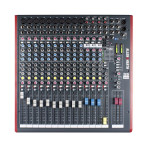
Modern producers have access to an unbelievable amount of technology.
A laptop can contain recording tools that would have required an entire professional studio twenty-five years ago.
Producers have virtual instruments.
Unlimited tracks.
Advanced sampling.
Pitch correction.
Stem separation.
Massive sample libraries.
Professional-quality plug-ins.
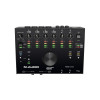
Affordable audio interfaces.
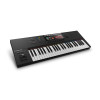
Powerful standalone production workstations.
The technology isn't preventing people from making timeless music.
If anything, producers have more creative freedom than ever.
The challenge may be knowing when to stop using the technology and focus on the song.
More Options Don't Automatically Create Better Records
Thousands of sounds.
Thousands of presets.
Thousands of plug-ins.
Thousands of samples.
Sometimes having everything makes committing harder.
A producer can spend two hours finding the perfect snare when the original snare was already good enough.
They can change synth presets endlessly.
They can keep editing vocals.
Keep rearranging.
Keep adding.
Keep removing.
Technology gives us unlimited possibilities.
But great records often come from decisive choices.
A recognizable drum sound.
A memorable bassline.
A strong melody.
A great vocal.
A hook people cannot forget.
The fundamentals are still the fundamentals.
Are We Overproducing Music?
Another interesting possibility is that producers can now do so much that it becomes tempting to do everything.
Automation everywhere.
Constant effects.
Beat switches.
Layers.
Transitions.
Ear candy every few seconds.
But sometimes the reason older records still hit is because the production allowed the important parts to remain important.
The drums had space.
The bass had space.
The vocal had space.
The hook had room to become memorable.
Not every second needed to demand attention.
Sometimes restraint is what makes something powerful.
Music Used to Be Connected to Places
There is another part of this conversation that technology alone doesn't explain.
Music once felt more connected to physical places.
Record stores.
Nightclubs.
Radio stations.
Local scenes.
College campuses.
Neighborhoods.
Record labels.
Certain cities had recognizable sounds.
You sometimes discovered music because a DJ played something you couldn't find anywhere else.
Today, everyone can potentially discover the same song at the same moment.
That creates incredible global reach.
But it can also make culture move more uniformly.
A song trends worldwide instead of slowly becoming important within a specific community.
That changes how memories form around music.
Maybe Scarcity Made Music More Valuable
When access was limited, records could feel more valuable.
You searched for them.
You bought them.
You traded them.
You waited for them.
You called a record store.
A DJ had something you didn't have.
A friend had an import you couldn't find.
Scarcity created anticipation.
Today, almost everything is available instantly.
And instant access is objectively convenient.
But psychologically, things that require effort often become more meaningful.
Maybe part of why older generations remember certain records so strongly is because discovering and owning those records required participation.
Music Has Become Part of the Content Feed
This may ultimately be the biggest difference.
Music used to be the activity.
You put on an album to listen to music.
Now music is often part of another activity.
It's underneath a TikTok.
It's underneath a Reel.
It's playing while you're gaming.
It's part of a workout playlist.
It's playing in the background while you're scrolling.
That doesn't mean people stopped loving music.
But the role music occupies has changed.
Sometimes we're listening to the song.
Sometimes the song is simply accompanying everything else.
And there is a big difference between hearing music and actually listening to it.
Producers Are Responding to the World Around Them
We shouldn't blame producers for adapting.
They are responding to how audiences consume music.
If listeners skip faster, producers naturally think about faster intros.
If short-form video can break a record, labels naturally think about social-media moments.
If releasing more frequently keeps an artist visible, artists naturally release more frequently.
Every era shapes its music.
Radio shaped song structure.
Vinyl shaped album length.
CDs changed album length again.
MTV changed visual presentation.
Streaming is now shaping music in its own way.
The technology changes.
The music responds.
But Longevity Can't Be Manufactured Easily
This is where the industry has a problem.
You can optimize a song for streams.
You can optimize a campaign for social media.
You can optimize artwork.
You can optimize release schedules.
You can optimize playlist pitching.
You can optimize the first thirty seconds.
What is much harder to optimize is:
Will somebody still care about this record in twenty years?
Nobody really knows.
Because longevity isn't only created by marketing.
It comes from emotion.
Memory.
Timing.
Culture.
Songwriting.
Production.
Performance.
And sometimes pure luck.
The right song meets the right generation at exactly the right moment.
Maybe Songs Need Time to Become Classics
We also have to remember something simple.
Songs from the 2000s have had twenty years to become part of people's lives.
Today's music hasn't.
A song released in 2026 hasn't had the opportunity to become nostalgic yet.
Maybe people will play it at weddings in 2046.
Maybe a DJ will drop it twenty years from now and an entire room will lose their minds.
We don't know.
That's why the better question isn't:
“Why is old music better?”
It's:
“What has changed about the conditions that allow music to become timeless?”
That is a much more interesting conversation.
Final Thought
The music industry has never had more access.
Artists can reach audiences around the world instantly.
Producers have technology previous generations could only dream about.
Listeners can discover almost any song ever recorded in seconds.
That is progress.
But maybe progress came with a tradeoff.
Everything moves faster.
Songs arrive faster.
Trends grow faster.
Listeners skip faster.
Artists release faster.
And the industry moves on faster.
The problem may not be that songs today are incapable of lasting.
The problem may be that we don't let them sit with us long enough to become part of our lives.
The records we still love from the 2000s weren't just songs.
They were attached to summers.
Cars.
Parties.
Relationships.
School years.
Nightclubs.
Friends.
Specific moments we can still picture when the first few seconds start playing.
Maybe that's what makes music timeless.
Not the year it was released.
Not whether it came from a CD or Spotify.
Not whether the song lasted two minutes or five.
It's whether the record stayed around long enough for life to happen around it.
And in an era where everything is designed to move on to the next thing as quickly as possible, maybe the biggest challenge facing music isn't making another hit.
It's giving that hit enough time to become a memory.
Leave a Comment