
-150x150.jpg)
-150x150w.jpg)

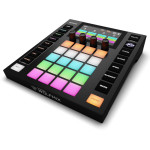




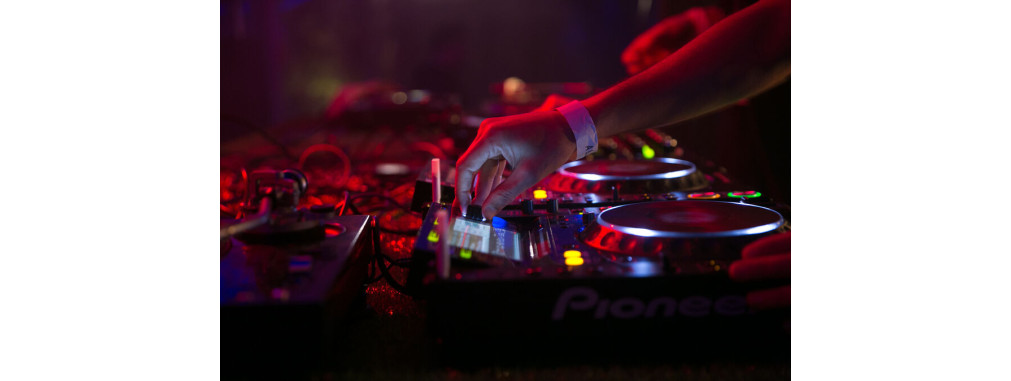
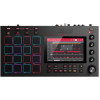
One thing I keep noticing more and more is DJs showing up to clubs, bars, lounges, and events with their own controller—even when the venue already has a professional DJ setup installed.
Now, there is nothing wrong with owning a controller.
Controllers are convenient. They are portable. You know exactly where everything is. Your Hot Cues are where you expect them to be, your effects are mapped the way you like, and your entire workflow is familiar.
But at some point we have to ask a bigger question:
Why are so many DJs becoming dependent on their personal controller instead of learning how to perform on professional equipment?
And from the perspective of a sound person, promoter, venue owner, or anyone responsible for the overall experience, I think this conversation matters even more because it eventually becomes a conversation about sound quality, reliability, changeovers, and professionalism.
Your Controller Should Be an Option, Not a Requirement
There is a big difference between choosing to use your own controller and needing your controller in order to DJ.
That distinction matters.
A professional DJ should be able to walk into different environments and adapt.
Maybe the venue has CDJs.
Maybe it has an all-in-one standalone system.
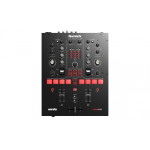
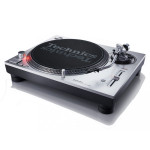
Maybe it has turntables and a battle mixer.
Maybe you are walking into a festival booth with a setup completely different from what you use at home.
You may prefer one system over another, but you should understand enough about professional DJ equipment to perform without completely rebuilding the booth around yourself.
If your entire ability to DJ disappears the second your personal controller is not available, that is something worth working on.
The Booth Is a Shared Workspace
This is especially important in clubs and bars.
The DJ booth is not always designed around one person.
There may be four or five DJs playing throughout the night.
When every DJ arrives with a different controller, laptop stand, power supply, USB hub, audio connection, and cable arrangement, the booth can quickly become a mess.
Now the sound person has to disconnect one setup, reconnect another, check levels, troubleshoot the audio path, make sure there is no hum, confirm the booth monitors are working, and then repeat the entire process again when the next DJ comes on.
That is not always necessary.
A professionally installed DJ setup creates consistency.
The next DJ plugs in their USB drive or laptop, checks their levels, and the night keeps moving.
That matters when you have a packed room.
Sound Quality Is More Than Just “Does It Make Noise?”
This is probably the biggest part of the conversation for me.
When you are responsible for sound, you cannot only think about whether audio is coming out of the speakers.
You have to think about the entire signal chain.
The DJ equipment feeds the mixer.
The mixer feeds the processing.
The processing feeds the amplifiers or powered speakers.
Every part of that chain matters.
A good club or venue system is usually designed around predictable professional-level audio connections and gain structure.
Now somebody brings in a controller and suddenly you might be dealing with a completely different output level or connection.
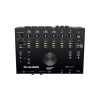
Maybe the controller has balanced XLR outputs.
Great.
Maybe it only has RCA.
That can still work, but now the sound person may be dealing with an unbalanced signal over a longer cable run.
Maybe somebody runs their controller master at 100 percent while clipping every channel because they think louder automatically means better.
Maybe the next DJ comes in extremely quiet and the sound engineer has to compensate at the house mixer.
All of those situations affect the consistency of the room.
And when you are running professional sound, consistency matters.
Gain Structure Is Something Every DJ Should Understand
This is another reason DJs should spend time on professional equipment.
You need to understand gain structure.
That means understanding the difference between your channel gain, channel fader, master output, booth output, and the house sound system.
Red lights are not a goal.
Turning everything all the way up does not make the system sound better.
In fact, sending a distorted signal into a great sound system just gives you louder distortion.
A professional sound system cannot repair a clipped signal coming from the DJ booth.
This is why DJs need to understand their equipment beyond simply knowing where the Play button is.
When a DJ knows proper gain staging, everybody benefits.
The DJ sounds better.
The sound engineer has more control.
The venue sounds better.
And ultimately, the audience gets a better experience.
Professional Equipment Teaches Adaptability
Learning professional equipment also forces DJs to stop relying so heavily on one specific workflow.
You learn where things are conceptually instead of memorizing where they are physically.
You understand what a cue button does regardless of the brand.
You understand channel gain regardless of which mixer is in front of you.
You understand loops.
You understand pitch control.
You understand beat grids.
You understand EQ.
You understand browsing.
You understand how to route headphones.
Then when you step onto unfamiliar equipment, you are not starting from zero.
You are simply learning where that manufacturer placed the tools you already understand.
That is an important difference.
USB Preparation Should Still Be Part of a DJ’s Skill Set
Another thing I think DJs should learn is how to prepare and perform from USB media.
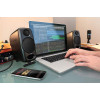
Even if your main setup is a laptop and controller, knowing how to properly export your music and walk into a professional media-player setup gives you another level of flexibility.
It also gives you a backup.
Laptops crash.
USB cables fail.
Software freezes.
Drivers act strange.
Updates happen at the worst possible time.
Having another way to perform is never a bad thing.
A working DJ should always be thinking about backup plans.
There Are Times When Bringing Your Controller Makes Sense
This is not an anti-controller article.
There are plenty of situations where bringing your own setup makes complete sense.
Mobile DJs often need to bring everything.
Weddings frequently require DJs to supply their own equipment.
Private events may not have a DJ booth at all.
Some performers have highly specialized routines that depend on a particular piece of hardware.
Turntablists might have a specific mixer or motorized system they prefer.
And some controllers today absolutely offer professional-quality audio, balanced outputs, excellent converters, and reliable performance.
The issue is not the controller.
The issue is dependency.
There is a difference between:
“I prefer performing on this.”
and:
“I cannot perform without this.”
Professional DJs should work toward the first one.
DJs Should Understand the Environment They Are Walking Into
Another part of professionalism is simply asking questions before the gig.
What equipment is installed?
What mixer is there?
What players are there?
Do I need to bring a laptop?
Are there open channels?
What outputs are available?
Is there room for a controller?
Who is handling sound?
Those conversations should happen before somebody arrives at 10:45 PM carrying a giant flight case and realizes there is nowhere to put it.
Communication makes everybody’s job easier.
Promoters and Venues Should Think About This Too
This is not only on DJs.
Promoters, venue managers, and hosts need to understand the importance of providing a dependable booth.
If you are booking DJs regularly, investing in professional equipment is part of building a professional environment.
You cannot expect DJs to adapt to a booth that is broken, missing cables, has damaged faders, or has one side of the audio cutting in and out.
Professional equipment also needs professional maintenance.
If venues want DJs to use the house setup, the house setup has to be trustworthy.
That relationship goes both ways.
Sound Quality Is Part of the Customer Experience
At the end of the day, customers may not know why something sounds bad.
They probably are not going to walk up and say:
“The output stage on that controller is clipping.”
They are just going to know the music sounds harsh.
Or too quiet.
Or distorted.
Or muddy.
Or that one DJ sounded much better than the next one.
Sound quality is part of the experience whether the audience understands the technical reason or not.
That is why DJs, sound engineers, promoters, and venue owners should all care about the equipment being used and how it connects to the system.
Music selection is important.
DJ skill is important.
But the quality of the signal reaching the audience is important too.
A Professional DJ Should Be Comfortable Being Uncomfortable
One of the best things you can do as a DJ is occasionally practice on equipment that is not yours.
Use CDJs.
Use another mixer.
Try standalone equipment.
Play on turntables.
Learn different software.
Understand different booth layouts.
You may never love every setup.
That is okay.
The goal is not to become equally comfortable on everything.
The goal is to avoid becoming helpless when your preferred setup is not available.
That is part of becoming a more complete DJ.
Final Thoughts
So why do DJs insist on bringing their own controller everywhere?
A lot of it comes down to comfort.
People practice on one system, become familiar with it, and naturally want to perform on the same thing.
There is nothing wrong with that.
But comfort can eventually become dependency.
And if your goal is to become a professional working DJ, eventually you have to be able to step outside of that comfort zone.
Learn professional equipment.
Understand proper gain structure.
Know how to work with a sound engineer.
Know how to prepare a USB.
Understand balanced and unbalanced connections.
Learn how to walk into a booth, look at what is available, and make it work.
Bring your controller when it makes sense.
But do not let your controller become the only reason you know how to DJ.
At Platinum Records, we believe equipment should expand what a DJ can do—not limit where they can perform.
Because being professional is not about owning one particular piece of gear.
It is about being prepared to perform when the music starts.
Leave a Comment