













Some pieces of DJ equipment become popular.
Others become part of the culture.
The Shure M44-7 belongs in the second category.
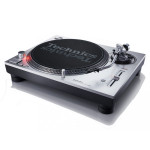
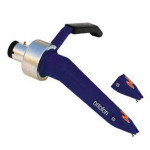
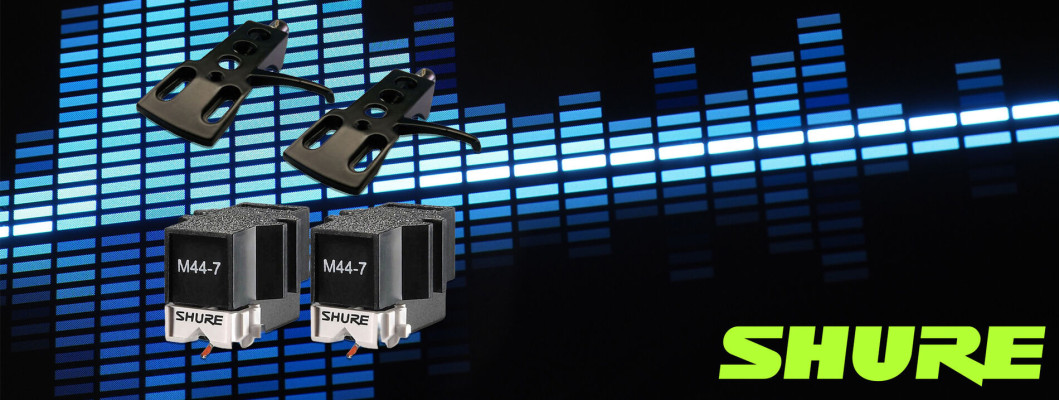
For generations of vinyl DJs, scratch DJs, turntablists, battle DJs, radio DJs, and record collectors, the sight of that small white stylus hanging underneath a headshell was almost as familiar as seeing a Technics SL-1200 sitting in a DJ booth.
It wasn't flashy.
There was no touchscreen.
No firmware.
No software updates.
No RGB lighting.
It simply did its job extremely well.
The M44-7 produced a strong output signal, tracked reliably, handled demanding DJ techniques, and developed a reputation for staying in the groove when DJs started pushing vinyl far beyond ordinary playback.
Then, in 2018, Shure announced something very few DJs expected.
The company was leaving the phono cartridge business entirely.
And suddenly one of the most trusted pieces of DJ equipment in the world had an expiration date.
The M44-7 Existed Before Modern DJ Culture
The history of the M44-7 goes back much further than scratching, DVS, battle mixers, or modern turntablism.
Shure documentation from the mid-1960s already included the M44-7 as part of the company's M44 series of moving-magnet cartridges. An early Shure data sheet specified a 0.7-mil diamond stylus, 1.5-to-3-gram tracking range, and unusually high output compared with other cartridges in the series.
By 1969, Shure was promoting the M44 family as a broadcast standard, stating that numerous AM and FM stations had standardized on M44-series cartridges because of their combination of ruggedness, performance, and versatility.
Think about that for a second.
The M44-7 existed before hip-hop had even developed into the culture we recognize today.
It wasn't originally created because somebody needed to crab scratch at a DJ battle.
But decades later, DJs would discover that the same characteristics that made it reliable in professional broadcast environments also made it extremely effective behind two turntables.
Then DJs Got Their Hands on It
Once DJs started manipulating records more aggressively, cartridges were being asked to do something very different from simply reproducing music.
A DJ might:
Back-cue a record repeatedly.
Scratch forward and backward.
Drop the needle quickly.
Hold the record while the platter continued rotating.
Perform fast cuts.
Backspin.
Transform.
Beat juggle.
Push the record sideways during routines.
That puts completely different demands on a stylus and suspension system.
The needle needs to reproduce the music accurately, but it also needs to stay in the groove.
The M44-7 became exceptionally respected for exactly that reason.
DJ TechTools described it as a legend of turntablism and noted how its suspension helped the stylus remain stable in the groove during aggressive scratching—something that became increasingly important as 1990s turntablists kept pushing the technical limits of what could be done with vinyl.
Why DJs Loved the M44-7
The numbers help explain part of its appeal.
Later official Shure specifications rated the M44-7 at 9.5 mV output, with a 1-to-3 gram tracking-force range and a spherical 0.7-mil N44-7 stylus.
That high output mattered.
In a loud DJ booth, having a cartridge that delivered a healthy signal into the mixer was valuable.
But specifications only tell part of the story.
The real reputation came from experience.
DJs trusted it.
You could scratch with it.
You could back-cue with it.
You could play records in a loud environment.
You could perform routines without constantly worrying about the needle jumping out of the groove.
For working DJs, reliability becomes more important than almost anything else.
If something works every weekend, you keep using it.
And once enough professionals begin trusting the same product, it becomes a standard.
The M44-7 Became Part of Turntablism
By the height of turntablism, certain pieces of equipment became almost inseparable from the culture.
Technics SL-1200 turntables.
Battle mixers.
Slipmats.
Control vinyl.
And for many DJs:
Shure M44-7 cartridges.
You could walk into a booth and see them.
Watch a scratch video and see them.
Go to a battle and see them.
Look at another DJ's headshell and immediately recognize that white N44-7 stylus.
The cartridge was no longer simply a component.
It had become part of the visual language of DJing.
That matters because DJ culture has always been shaped by tools.
Certain equipment becomes associated with specific generations because DJs develop techniques around it.
The M44-7 helped support a period when turntablism was becoming faster, more technical, and more aggressive.
It Also Worked for DJs Who Weren't Turntablists
The M44-7 story isn't only about scratching.
Plenty of traditional vinyl DJs used them because they wanted something dependable.
House DJs.
Hip-hop DJs.
Open-format DJs.
Radio DJs.
Mobile DJs.
Collectors.
People playing 12-inch singles.
People playing 45s.
Not everybody using an M44-7 was trying to win a battle.
Sometimes they simply wanted a cartridge that sounded good, provided strong output, and wouldn't make them nervous every time they touched the record.
That broad appeal is one reason its disappearance affected so many people.
Then Came May 1, 2018
On May 1, 2018, Shure announced that it would discontinue production of its entire phono product category effective that summer.
The company explained that maintaining its standards had become increasingly difficult because of challenges involving materials, processes, costs, delivery, and fluctuating demand.
Shure made an important decision.
Instead of continuing to manufacture cartridges under conditions it felt could compromise the company's quality standards, it chose to exit the market completely.
That meant the M44-7 was finished.
So was the M44G.
Replacement styli would no longer be something DJs could assume Shure would manufacture indefinitely.
One of the most recognizable names in DJ cartridges was walking away from phono.
DJs Didn't Take the News Lightly
The reaction made sense.
For many DJs, the M44-7 wasn't something they were experimenting with.
It was something they had already used for years.
Their tonearms were set up around it.
Their tracking force was dialed in for it.
Their records had been played with it.
Their muscle memory had developed around its behavior.
Their sound had passed through it.
Then suddenly the message was:
When the remaining stock is gone, it's gone.
That's very different from a company releasing an updated version.
There was no M44-8 waiting to replace it.
No new Shure DJ cartridge.
No next generation.
The entire category was ending.
The Rush for Remaining Inventory
When a product has been available for decades, people begin treating it like it will always exist.
Then scarcity changes everything.
DJs started buying extras.
Replacement styli became increasingly valuable.
Existing cartridges suddenly felt like equipment worth protecting rather than something easily replaced.
DJ TechTools later noted that once DJs understood the cartridge was no longer being produced, some buyers were importing inventory from overseas and selling it at inflated prices because demand remained so strong.
That's what happens when a professional standard disappears without a direct successor.
The product stops being ordinary inventory.
It becomes finite.
The Needle Became More Valuable Than Ever
The cartridge body itself can last a very long time.
The stylus is the consumable.
That created the bigger problem.
You could own ten M44-7 cartridge bodies.
Eventually, you still needed replacement N44-7 styli.
Every hour of playing records brought the original Shure replacement supply a little closer to disappearing.
Suddenly DJs had to make decisions they had never needed to think about before.
Do I save my remaining Shure needles for important gigs?
Do I buy replacements now before prices climb?
Do I switch cartridges completely?
Do I trust aftermarket replacements?
Do I keep using my M44-7 bodies and find another company's stylus?
For DJs who had used the same cartridge for years, those weren't small questions.
The Aftermarket Had to Step In
Shure's exit didn't eliminate demand.
It created a vacuum.
One of the companies that stepped into that space was JICO, a Japanese manufacturer with decades of experience producing replacement styli.
JICO openly acknowledges the impact of Shure leaving the category. The company says it developed the J44D and J44A 7 as replacement cartridge designs after the M44G and M44-7 were discontinued, with the J44A 7 intended to reproduce characteristics similar to the M44-7.
JICO later explained that after Shure announced its withdrawal from the phono business in May 2018, it eventually produced replica 44-series cartridges and replacement needles.
Even today, JICO still produces styli compatible with original M44-7 cartridge bodies, including models aimed specifically at scratch and DVS use.
That tells you everything you need to know about the legacy of the original product.
Nearly a decade after Shure stopped making it, manufacturers are still designing products around people who refuse to stop using it.
But Replacements Aren't the Same as Continuity
Third-party support helped tremendously.
Without it, many M44-7 cartridge bodies would probably be sitting unused today.
But there's still a difference between having alternatives and having the original manufacturer continue production.
DJs knew exactly what they were getting with an original Shure N44-7.
Once production stopped, the market became more fragmented.
Different replacement styli could have different tracking-force recommendations.
Different suspension characteristics.
Different output.
Different sonic character.
Different durability.
That forced DJs who had spent years using one familiar setup to begin experimenting again.
For some people, that was fine.
For others, it felt like losing a reference point.
The Discontinuation Forced DJs to Move On
Every DJ eventually had to make a choice.
Keep the M44-7 bodies alive through aftermarket needles.
Stockpile original Shure styli.
Or move to another cartridge platform entirely.
And plenty of DJs eventually moved on.
Other cartridge manufacturers continued developing products specifically for professional DJ use.
Entire new generations of DJs entered the culture without ever having an original M44-7 on their turntable.
DVS workflows changed.
Controllers became dominant.
Motorized controllers recreated turntable feel without requiring cartridges at all.
Club booths increasingly moved toward digital players.
From that perspective, Shure's decision happened during a much larger transition in DJ technology.
But vinyl never disappeared.
And neither did scratching.
That's why the loss continued to matter.
Something Bigger Was Lost
The end of the M44-7 wasn't simply the discontinuation of an accessory.
It represented the disappearance of one of the industry's shared standards.
That's increasingly rare.
Modern DJ equipment changes quickly.
New controllers arrive.
New software arrives.
Firmware changes workflows.
Models get replaced every few years.
The M44-7 belonged to another era.
It survived technological changes because the fundamental job never changed:
Keep the needle in the groove and reproduce the record reliably.
That's why DJs could build decades of familiarity with it.
When something lasts that long, people stop thinking of it as a product generation.
It becomes infrastructure.
Think About How Long Its Influence Lasted
The M44 series was already documented by Shure in the 1960s.
Hip-hop had not yet developed.
Turntablism as we understand it didn't exist.
DVS didn't exist.
Serato didn't exist.
Scratch battles didn't exist.
Yet decades later, DJs discovered that this cartridge worked brilliantly for a performance style its original engineers could never have fully anticipated.
That's one of the most fascinating things about the M44-7.
The culture found a new purpose for it.
DJs took technology designed for record reproduction and pushed it into becoming an instrument.
The M44-7 and the Technics Effect
There's a similarity between how DJs talk about the M44-7 and how they talk about classic Technics turntables.
Neither became legendary because of marketing alone.
They became legendary because thousands of DJs used them under real conditions for years.
Night after night.
Battle after battle.
Club after club.
Record after record.
Reliability created reputation.
Reputation created trust.
Trust created culture.
You can't manufacture that overnight.
Younger DJs May Never Understand How Common They Were
This is one of those generational changes that happens quietly.
A DJ starting today might see an M44-7 and think of it as vintage equipment.
An older DJ may see the exact same cartridge and think:
That was just what we used.
That's how quickly standards become history.
There was a time when finding M44-7 needles wasn't a treasure hunt.
You bought replacements.
You wore one out.
You installed another.
It was normal.
Only after production ended did everybody begin recognizing how much they had depended on that normal availability.
Record Stores Felt It Too
The disappearance affected retailers and record stores as well.
Cartridges and styli are recurring products.
Customers return for them.
A DJ might keep the same turntables for twenty years while buying replacement needles many times throughout that period.
When a dominant cartridge disappears, stores have to help customers figure out what comes next.
Which replacement stylus works?
Should they change cartridges?
Which alternatives track similarly?
What's best for scratching?
What's best for traditional vinyl playback?
What's best for DVS?
The discontinuation transformed what had once been a straightforward replacement purchase into an education process.
And that continues today.
The M44-7 Proved Something Important About DJ Equipment
The best DJ equipment doesn't always need the longest feature list.
Sometimes the most important products become legendary because they solve one problem exceptionally well.
The M44-7 tracked.
It produced strong output.
It tolerated abuse.
It worked.
That reliability allowed DJs to stop thinking about the cartridge and focus on the performance.
That's an underrated quality in professional equipment.
When you trust something completely, it becomes invisible.
You don't think about it until it disappears.
Vinyl's Resurgence Makes the Story Even More Interesting
What makes Shure's decision especially fascinating in hindsight is what happened afterward.
Vinyl continued growing.
Turntables continued selling.
Collectors kept buying records.
Turntablism survived.
DVS survived.
Younger DJs began developing new interest in vinyl culture.
Motorized controllers started bringing physical platter interaction back into mainstream DJ equipment.
And companies such as JICO continued investing in products compatible with the old Shure ecosystem.
JICO has even described today's renewed global interest in analog records as something few people could have predicted during vinyl's difficult years.
The M44-7 disappeared just before vinyl culture entered another interesting chapter.
Could Shure Ever Bring It Back?
People will always ask.
But Shure's official position in 2018 was clear: the company decided to discontinue its phono products because it could no longer maintain the standards it required under the conditions it faced.
Today, Shure itself directs people searching for discontinued styli toward third-party suppliers including JICO and other replacement specialists.
So the M44-7 survives differently now.
Not as a current Shure product.
As a legacy.
And Maybe That's Why It Means More Now
Sometimes you don't recognize an industry standard until it is gone.
When the M44-7 was readily available, it was easy to take it for granted.
It was a needle.
Buy it.
Mount it.
Balance the tonearm.
Play records.
Scratch.
Replace it when necessary.
Keep going.
Once Shure stopped producing it, DJs realized they had lost something much bigger.
They lost certainty.
There would always be another mixer.
Another controller.
Another media player.
But there wasn't going to be another Shure M44-7.
Final Thought
The Shure M44-7 helped shape DJ culture without ever needing to be the center of attention.
It sat underneath the headshell while DJs did the visible work.
It survived scratches.
Backspins.
Cueing.
Battles.
Clubs.
Radio booths.
Bedroom practice sessions.
Thousands upon thousands of records.
Its contribution wasn't flashy.
It was dependable.
And that dependability gave generations of DJs the confidence to push vinyl harder, move faster, develop new techniques, and turn the turntable into something far beyond a playback device.
Then in 2018, Shure stopped making it.
The industry adapted.
It always does.
DJs bought remaining stock.
Aftermarket manufacturers stepped in.
New cartridges became standards.
Technology continued moving forward.
But the fact that DJs are still looking for M44-7-compatible needles, still maintaining old cartridge bodies, and still comparing modern products to something designed generations ago tells you everything you need to know.
The Shure M44-7 wasn't simply a needle that DJs used.
It became part of the instrument.
And when production stopped, the DJ industry didn't just lose another product.
It lost one of the pieces of equipment that helped build the culture.
Leave a Comment