

























There was a time when Black Friday represented something far greater than a retail promotion. It was a cultural phenomenon, an annual reflection of consumer confidence, purchasing power, and the collective enthusiasm surrounding the holiday shopping season.
Consumers would gather outside retail stores hours before opening, strategically plan their purchases, and anticipate discounts that were rarely available throughout the rest of the year.
Fast-forward to 2026, and the landscape looks considerably different.
The absence of overwhelming crowds and traditional shopping rituals raises a more sophisticated question: Has Black Friday lost its cultural significance, or has the economic environment fundamentally altered the relationship between consumers and consumption?
The answer extends far beyond the emergence of e-commerce.
The Decline of Consumer Urgency
Historically, Black Friday operated on the economic principles of scarcity and urgency. Limited inventory, exclusive pricing, and restricted shopping windows created a psychological incentive for consumers to participate.
The digital marketplace has gradually dismantled that model.
Retailers now introduce holiday promotions weeks in advance, extending discounts across November and into December. Consumers can compare prices across multiple businesses, research product histories, and evaluate purchasing alternatives without leaving their homes.
According to Adobe Analytics, American consumers spent a record $11.8 billion online on Black Friday in 2025, representing a 9.1% increase over the previous year.
This suggests that Black Friday has not necessarily declined in commercial relevance. Rather, its visibility has changed.
What was once a collective physical experience has become an increasingly individualized digital transaction. The economic activity remains, but the cultural spectacle surrounding it has diminished.
The Erosion of Purchasing Power
Perhaps the most significant consideration is the relationship between income, inflation, and disposable income.
Over the past several years, rising costs associated with housing, groceries, transportation, insurance, and other essential expenditures have placed considerable pressure on household budgets.
The Federal Reserve's 2026 report on the economic well-being of American households found that rising prices remained the most common financial concern among adults surveyed in 2025.
Even when inflation begins to moderate, consumers are not necessarily returning to the financial circumstances they experienced before prices increased. A declining inflation rate indicates that prices are rising more slowly, not that previous increases have been reversed.
This distinction is essential when evaluating consumer behavior.
An individual earning more money today than they did five years ago may still possess less discretionary purchasing power once essential living expenses are accounted for.
Consequently, consumers are increasingly evaluating purchases through the lens of opportunity cost. Every dollar allocated toward entertainment, technology, or recreational equipment represents a dollar that cannot be allocated toward another financial obligation.
The conversation has shifted from "How much am I saving?" to "Can I justify spending this money in the first place?"
Record-Breaking Sales Can Be Misleading
One of the complexities of evaluating Black Friday through economic data is the distinction between nominal spending and real purchasing power.
Retail sales figures may reach record levels without necessarily indicating that consumers are financially better off.
If the cost of goods increases, consumers can collectively spend more money while purchasing the same quantity of products, or potentially fewer.
Furthermore, aggregate spending figures do not reveal how evenly financial prosperity is distributed across households. Higher-income consumers may continue spending comfortably, while middle-income and lower-income households become increasingly selective.
A successful retail season, measured exclusively through revenue, does not automatically translate into widespread economic prosperity.
The distinction between economic growth and individual financial well-being is often overlooked in conversations surrounding consumer spending.
The Psychology of the Modern Consumer
Today's consumer is arguably more informed, financially conscious, and skeptical of traditional marketing strategies.
The abundance of promotional campaigns throughout the calendar year has contributed to what could be described as discount fatigue.
When virtually every major holiday becomes a retail event, the perceived exclusivity of any individual promotion begins to deteriorate.
Consumers are also becoming more aware of pricing structures, financing costs, product depreciation, and the difference between perceived value and actual value.
A discount is no longer inherently persuasive.
Instead, the modern consumer is more likely to evaluate whether a purchase contributes meaningfully to their lifestyle, professional development, or long-term financial objectives.
This represents a fundamental shift in the psychology of consumption. Retailers are no longer competing exclusively for consumer attention. They are competing for financial justification.
The Economic Impact on the DJ and Professional Audio Industry
Within the DJ and professional audio industry, these economic conditions create an especially interesting dynamic.
Unlike many conventional consumer electronics, professional music equipment often exists at the intersection of personal passion and economic investment.
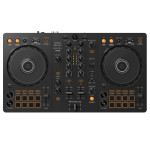
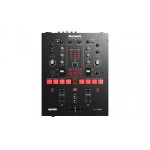
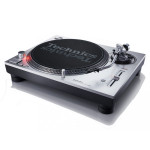
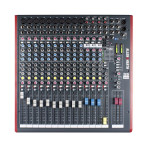
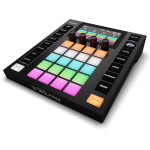
A DJ controller, professional mixer, turntable, or production workstation can function as both a creative instrument and a revenue-generating asset.
However, when economic uncertainty increases, purchasing decisions become more analytical.
A working DJ may postpone upgrading a controller because their existing equipment continues to generate income. A producer may prioritize improving their current workflow rather than investing in a new workstation. An aspiring artist may choose an affordable entry-level setup instead of making a substantial financial commitment to flagship equipment.
The decision becomes less about technological advancement and more about return on investment.
Does the equipment expand creative capabilities? Does it improve professional efficiency? Does it create opportunities that would otherwise be inaccessible? Does the purchase make financial sense relative to its intended purpose?
These questions reflect a more mature approach to equipment ownership.
The desire for innovation has not disappeared. Rather, consumers are placing greater emphasis on the economic value that innovation delivers.
The Economic Reality Behind Retail Pricing
It is equally important to recognize that consumers are not the only participants navigating economic uncertainty.
Retailers must contend with manufacturing costs, international transportation, import expenses, labor, commercial rent, inventory financing, and supplier pricing structures.
Independent retailers, in particular, must carefully balance competitive pricing with the financial sustainability of their businesses.
Unlike major corporate retailers with extensive capital resources and diversified revenue streams, independent businesses often operate within considerably narrower financial margins.
The expectation that retailers should continuously offer deeper discounts overlooks the economic infrastructure required to bring products to market.
A sustainable marketplace depends on more than the consumer's ability to secure the lowest possible price. It also depends on businesses maintaining the financial capacity to provide products, employment, expertise, and customer support.
Why Independent Retailers Still Matter
In an increasingly transactional marketplace, independent music retailers provide something that cannot be entirely replicated through automated recommendations or large-scale distribution platforms: specialized human expertise.
Understanding the differences between professional equipment, identifying compatibility requirements, evaluating long-term reliability, and recommending products based on individual creative objectives require industry knowledge.
For DJs, musicians, and producers, purchasing the wrong equipment at a discounted price can ultimately become more expensive than purchasing the appropriate equipment at a fair price.
Independent retailers also contribute to the cultural infrastructure of the music industry. They create environments where artists exchange knowledge, discover technology, develop relationships, and remain connected to the communities that sustain their respective crafts.
Supporting these businesses represents an investment in more than merchandise. It represents an investment in the ecosystem surrounding music and creative expression.
Black Friday as a Reflection of Economic Change
Black Friday has not necessarily lost its relevance. Instead, it has become a reflection of a society experiencing significant technological, cultural, and economic transformation.
The traditional excitement surrounding consumption has gradually been accompanied by greater financial scrutiny. Convenience has replaced much of the spectacle, while economic uncertainty has encouraged more deliberate purchasing decisions.
Perhaps what we are witnessing is not the decline of Black Friday, but the evolution of the consumer.
At Platinum Records, we recognize that purchasing professional DJ and music production equipment represents a meaningful financial commitment. Our philosophy extends beyond selling equipment. It is about helping artists make informed investments that support their creativity, professional ambitions, and long-term development.
Whether you are purchasing your first DJ controller or upgrading to an industry-standard professional setup, the value of your investment should extend well beyond the initial transaction.
The greatest measure of a Black Friday purchase is not how much money you saved, but how much lasting value your investment creates.
Explore our Black Friday specials at www.platinum-records.com.
Leave a Comment