








For years, the DJ industry seemed to be moving further and further away from traditional turntables.
Controllers became smaller.
Laptop DJing became normal.
Standalone systems eliminated the computer altogether.
Touchscreens, Stems, streaming services, Sync, performance pads, and software features continued changing what a modern DJ setup looked like.
At the same time, something interesting has been happening.
Vinyl never completely disappeared.
In fact, vinyl has continued growing as a physical music format. According to the RIAA, 2025 marked the 19th consecutive year of vinyl revenue growth in the United States.
And now another trend is happening inside DJ equipment.
Motorized platters are becoming increasingly important again.
Products such as the Pioneer DJ DDJ-REV7, RANE SYSTEM ONE, and Hercules DJControl T10 are bringing the physical movement of a spinning platter into modern digital DJ systems. Pioneer DJ specifically describes the DDJ-REV7 as allowing DJs to perform as if they were using turntables, while RANE describes SYSTEM ONE as combining the feel of turntables with modern standalone DJ technology.
That raises an interesting question.
Could motorized controllers actually be encouraging a new generation of DJs to become interested in real turntables?
A Generation That Didn't Necessarily Start With Vinyl
For previous generations of DJs, turntables were not a specialty.
They were simply the equipment.
If you wanted to DJ, there was a good chance you learned on vinyl.
You learned how to touch the record.
You learned how much pressure to put on it.
You learned how to cue a record manually.
You learned how to release the record on beat.
You learned how to ride the pitch.
You learned what a slipmat did.
You learned how torque felt underneath your fingertips.
Eventually, digital DJing changed the entry point.
A new DJ today can start with a relatively inexpensive controller, connect a laptop, load software, and begin mixing within minutes.
That accessibility has been great for DJing.
More people can learn.
Equipment is easier to transport.
Music libraries can contain thousands of tracks.
But it also means an entire generation of DJs may never have had a reason to touch a spinning record.
Motorized controllers are starting to change that.
The Platter Is Moving Again
A standard controller jog wheel can teach someone plenty about DJing.
You can cue.
You can pitch bend.
You can scratch.
You can manipulate a track.
But there is something different about a platter that is physically moving underneath your hand.
The DJ has to interact with it differently.
Hold the platter and the music stops while the motor continues trying to rotate underneath it.
Release it and the platter immediately returns to speed.
Push it slightly and you feel the movement.
Scratch it and you physically manipulate something that feels much closer to the traditional turntable experience.
Those differences may seem small until someone actually experiences them.
For a DJ who has only used static jog wheels, touching a motorized platter for the first time can completely change the relationship between their hands and the music.
Manufacturers Are Intentionally Recreating the Turntable Experience
This isn't accidental.
Manufacturers are actively designing modern controllers around the physical feel of traditional DJ equipment.
The Pioneer DJ DDJ-REV7 uses motorized jog wheels designed to provide a turntable-style performance experience.
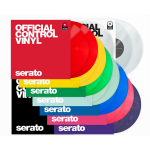
RANE took the concept even further with SYSTEM ONE, describing it as a standalone DJ system with motorized platters that combines the legacy feel of turntables with a modern laptop-free workflow. The system even uses slipmats and control discs mounted over the motorized platters.
Then you have something like the Hercules DJControl T10.
Hercules built the T10 around 10-inch motorized metal platters, actual vinyl records, Dr. Suzuki slipmats, and slipsheets. The company specifically describes the system as delivering real vinyl feel while retaining the convenience of a controller.
Think about what that means for somebody learning today.
They may still be using Serato.
They may still be using Stems.
They may still have streaming services available.
They may still have performance pads and modern effects.
But underneath their hands is a physical platter, slipmat, and vinyl-style surface.
That is a very different introduction to DJing than clicking Play on a static controller.
Motorized Controllers Could Be the Gateway
This is where things become interesting.
A new DJ buys a motorized controller.
At first, maybe they simply like the way it feels.
Then they start scratching.
They learn how to hold the platter.
They begin understanding slip.
They start adjusting torque.
They notice how differently they have to manipulate the music.
Eventually they may start watching turntablists.
Then they see DJs using Technics.
Maybe they see a DVS setup.
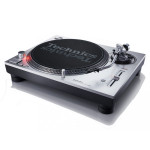
Maybe somebody lets them try a pair of SL-1200s.
And suddenly they understand what all the conversation around turntables was about.
That curiosity could be enough to create a completely different path into DJing.
For years, the common progression looked something like:
Entry-Level Controller → Professional Controller → Club Equipment
Motorized controllers create another possible path:
Controller → Motorized Controller → DVS → Turntables → Vinyl
Not everybody will follow that path.
They don't have to.
But now the bridge exists.
There Is a Difference Between Turntable-Style DJing and Vinyl DJing
This distinction is important.
Using a motorized controller does not automatically make someone a vinyl DJ.
A DJ using a REV7, SYSTEM ONE, or T10 can still be playing completely digital music files.
They can still use cue points.
They can still use Stems.
They can still use Sync.
They can still browse thousands of songs instantly.
Traditional vinyl DJing is different.
With vinyl, you have a physical record collection.
There is no waveform.
There are no Hot Cues.
There is no instant search bar.
You need to know what record you're reaching for.
You need to physically find it.
You need to cue it.
And you have to understand what the record is going to do before you put the needle down.
Those differences matter.
But motorized controllers can teach something equally important:
physical interaction with music.
And that may be enough to spark interest in the rest of the culture.
The Technology That Replaced Turntables Might Help Preserve Turntablism
There is some irony here.
For years, controllers were sometimes viewed as the equipment that was replacing turntables.
Now controllers may actually be helping preserve some of the techniques associated with them.
Scratching feels more natural on a moving platter.
Backspins feel different.
Cueing feels different.
Dropping a track manually feels different.
Even simply keeping your hand on the platter creates a different relationship with the music.
Motorized equipment keeps those physical movements alive while still giving DJs access to modern digital workflows.
That matters because turntablism is not only about owning vinyl.
It is also about technique.
It is about touch.
It is about timing.
It is about manipulating music physically.
If younger DJs develop those skills on motorized digital equipment, the techniques themselves continue being passed down.
Vinyl Culture Is Also Becoming Visible Again
At the same time, vinyl itself has become culturally relevant again.
Record stores are still part of music culture.
Artists continue releasing vinyl editions.
Collectors are buying records.
Younger listeners are discovering physical media.
And vinyl revenues have now grown for nearly two decades consecutively in the United States.
That means a new DJ might encounter vinyl from two directions at once.
They see records becoming culturally interesting again.
Then they get behind a motorized controller and experience something that resembles the physical interaction of a turntable.
Those two experiences can naturally connect.
The person who bought a motorized controller because it looked fun might eventually become curious about owning actual records.
The person collecting vinyl might eventually wonder what it would be like to DJ with those records.
Those worlds aren't as separate as they once appeared.
DVS Might Be the Perfect Middle Ground
There is also another step between controllers and traditional vinyl DJing:
DVS.
Digital Vinyl Systems allow DJs to use traditional turntables while controlling digital music.
For somebody moving from a motorized controller, that can be the perfect transition.
The DJ gets the physical turntable.
They get the tonearm.
They get the platter.
They get the slipmat.
They get the traditional booth layout.
But they can still access the digital library they already built.
They do not immediately need thousands of records.
That makes DVS one of the most natural bridges between modern controller DJing and traditional turntable technique.
Once someone becomes comfortable there, playing actual vinyl becomes a much smaller jump.
Does This Mean Turntables Will Become the Standard Again?
Probably not.
And they don't need to.
Controllers have too many advantages.
They're portable.
They're convenient.
They're powerful.
They're easier to set up.
Standalone systems have become extremely capable.
Club players remain standard in many professional environments.
Every format has a reason to exist.
The interesting part isn't whether turntables are going to replace controllers again.
The interesting part is that turntable culture may be influencing the design of controllers.
Instead of the industry completely abandoning the spinning platter, manufacturers continue finding new ways to bring it into modern systems.
That says something.
There is obviously still value in the physical experience.
Maybe DJs Want More Than Convenience
For years, DJ technology focused heavily on making everything easier.
Smaller setups.
Faster music searching.
Automatic analysis.
Sync.
Touchscreens.
Streaming.
Cloud libraries.
Stems.
All of those developments are useful.
But motorized controllers suggest that convenience isn't the only thing DJs care about.
Sometimes people want equipment that feels good to use.
There is something satisfying about touching a moving platter.
There is something expressive about physically manipulating a track.
There is something different about scratching when the surface underneath your hand is actually rotating.
Technology can improve workflow.
But DJing is still a physical performance.
Motorized controllers bring some of that physicality back.
The Best of Both Worlds?
Maybe that is why these products are connecting with DJs.
They don't force someone to choose between old-school and new-school DJing.
You can have motorized platters and Stems.
You can have slipmats and streaming.
You can scratch while using digital files.
You can have turntable-style control without carrying two turntables and a mixer to every gig.
That combination gives newer DJs access to techniques that might otherwise have seemed intimidating or outdated.
And once they understand those techniques, some of them may naturally want to experience the original equipment that inspired them.
Final Thought
For years, people asked whether controllers were going to kill the turntable.
Maybe we were asking the wrong question.
Motorized controllers could end up doing something nobody expected.
They might introduce DJs who grew up entirely in the digital era to the physical feel that made generations of DJs fall in love with turntables in the first place.
A DJ may start on a controller.
Then they touch a motorized platter.
They learn to scratch.
They learn to cue.
They start understanding torque and slip.
Then one day they step behind a pair of real turntables.
And instead of the equipment feeling foreign, it feels familiar.
That doesn't mean every motorized-controller DJ is going to start buying crates of records.
But some will.
And even for the ones who don't, they are still being introduced to a style of DJing built around touch, timing, and physical control.
Maybe motorized controllers aren't pulling DJs further away from turntables.
Maybe they're creating the next generation of DJs who will want to discover them.
Leave a Comment