
-150x150.jpg)


-150x150w.jpg)











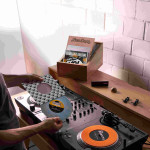
DJ technology has come a long way.
There was a time when DJs had two turntables, a mixer, records, headphones, and whatever creativity they could bring to the booth. If you wanted an instrumental, you had to own the instrumental. If you wanted an acapella, you had to find the acapella. If you wanted to create something different, you had to figure out how to do it with the records you had in front of you.
Today, things are completely different.
Modern DJ software can separate vocals, drums, basslines, and instrumentals from a finished song almost instantly. With the push of a button, DJs can remove a vocal, isolate drums, create an acapella, build mashups, or completely change the direction of a record while it is playing.
That technology is incredible.
But it also raises an interesting question:
Are DJs becoming too dependent on Stems?
Stems Changed What Is Possible Behind the Decks
There is no question that Stems opened another level of creativity for DJs.
A DJ can take the vocal from one record and put it over the instrumental of another. You can remove the drums from a track to create a smoother transition. You can isolate vocals for live mashups or pull elements away to make room for another song.
Things that used to require studio preparation can now happen live.
That is powerful.
For creative DJs, Stems can make a set feel completely different from simply playing one track after another.
And that is exactly how technology should be used.
The problem starts when the feature becomes something a DJ cannot perform without.
The Tool Should Not Become the Skill
This is where we have to separate using technology from depending on technology.
There is nothing wrong with using Stems.
Just like there is nothing wrong with using loops, Hot Cues, effects, sync, performance pads, or any of the other tools modern DJ equipment gives us.
But those tools should add to your ability.
They should not become your ability.
Can you still make a clean transition without removing the vocals?
Can you understand where the verse ends and the chorus begins without looking at a waveform?
Can you mix two records naturally without immediately reaching for a Stem button?
Can you recognize when two songs actually complement each other instead of forcing them together because you can remove half of each track?
Those fundamentals still matter.
Sometimes the Best Mix Is Just Two Great Records
DJ technology has become so powerful that sometimes we feel like we have to use everything.
We have Stems.
We have effects.
We have loops.
We have samplers.
We have Hot Cues.
We have four decks.
We have performance pads everywhere.
But sometimes the best transition of the night is still simply playing the right record after the right record.
That is something technology cannot replace.
The crowd does not care how complicated the transition was.
They care about how it felt.
You can perform a technically complicated Stem routine with five things happening at once, but if the next record does not connect with the room, none of that matters.
On the other hand, you can make the simplest transition in the world and completely destroy the dance floor because you chose the perfect song.
That is why selection will always come first.
Stems Can Make DJs More Creative
We should also give Stems the credit they deserve.
In the right hands, they are incredible.
Imagine playing a classic instrumental underneath a modern vocal.
Or taking the drums away from a track right before the next record drops.
Or creating an acapella transition between two genres that normally would not fit together.
That is where Stems become interesting.
The technology gives DJs another creative layer.
For open-format DJs especially, that can be extremely useful because you are constantly moving through genres, tempos, eras, and different styles of music.
Hip-hop into house.
R&B into Afrobeats.
Pop into Latin.
An old-school vocal over something completely current.
That type of creativity can make a set memorable.
But the DJ still has to know why those records belong together.
Not Every Song Needs to Become a Mashup
This might be one of the biggest issues.
Once DJs discover Stems, there can be a temptation to turn everything into a mashup.
Vocals over everything.
Instrumentals underneath everything.
Constant drum swaps.
Constant acapellas.
At some point, it can become too much.
Sometimes people just want to hear the record.
There is value in knowing when to manipulate music and when to leave it alone.
Certain songs work because of the relationship between the vocal, drums, bassline, melody, and production. Pulling those elements apart just because the technology allows you to does not automatically improve the record.
Restraint is part of DJing too.
Knowing when not to do something is a skill.
What Happens When the Technology Is Not Available?
This is another question DJs should ask themselves.
What happens when you step into a booth that does not have the same setup you practice on?
What happens when your software does not analyze a track correctly?
What happens if you have to play on different equipment?
What happens when the Stem separation does not sound good on a particular song?
Can you still DJ?
Professional DJs have always needed adaptability.
You should be able to walk into different environments and still understand the basic language of DJing: tempo, phrasing, EQ, gain structure, music selection, crowd reading, and timing.
Technology changes.
Those fundamentals do not.
Stems Cannot Read a Dance Floor
This might be the biggest point of all.
Stems can separate a vocal.
They cannot tell you whether the crowd wants that vocal.
They can isolate drums.
They cannot tell you whether the room needs more energy.
They can create an instrumental.
They cannot tell you whether the people in front of you are bored.
They can make two records technically compatible.
They cannot tell you whether those records make sense together.
That is still the DJ's responsibility.
And that is why crowd reading remains one of the most important skills in DJing.
You can have every technology available and still lose the room.
The Same Conversation Happened With Sync
We have seen this before.
When sync became common, people argued that it was going to destroy DJing.
It did not.
It simply automated one part of the process.
Good DJs found ways to use that extra time creatively. Other DJs used it as a shortcut without developing the fundamentals.
Stems are similar.
The feature itself is not the problem.
It comes down to how the DJ uses it.
If Stems allow you to create something you could not have created before, great.
If you cannot transition between two songs without them, that is different.
New Technology Should Raise the Standard
Instead of asking whether new technology makes DJing easier, maybe we should be asking whether DJs are doing more with the opportunities technology gives them.
If beatmatching is easier, spend more time digging for music.
If Stems give you more creative control, develop better routines.
If modern software gives you thousands of tracks, learn your library better.
If you have four decks, make sure you actually have a musical reason to use four decks.
Technology should raise the creative ceiling.
It should not lower the standard.
Fundamentals Still Matter
No matter where DJ technology goes next, certain skills will always matter.
Know your music.
Understand phrasing.
Learn EQ.
Understand gain structure.
Know how to transition without depending on effects.
Know when to let a song play.
Learn how to recover when something goes wrong.
And most importantly, learn how to read people.
Those skills are what allow you to use technology instead of letting technology use you.
The Best DJs Will Use Both
This does not have to be an argument between old-school DJing and modern DJ technology.
The strongest DJs will understand both.
Learn the fundamentals.
Then use the technology.
Know how to blend traditionally, but also know how to create something new with Stems.
Understand music structure before pulling that structure apart.
Know how to play a great set without all the extra features, then use those features when they actually improve the experience.
That balance is where modern DJing gets exciting.
Final Thoughts
So, are DJs becoming too dependent on Stems?
Some probably are.
But Stems themselves are not ruining DJing.
They are simply another tool.
And like every tool that has come before them, their value depends on who is using them.
A great DJ can take Stems and create something nobody in the room has heard before.
But a great DJ should also be able to turn every Stem off, play two records, and still control the dance floor.
Because at the end of the day, technology can separate the music into pieces—but it still takes a DJ to know how those pieces should come together.
At Platinum Records, we believe new technology should push creativity forward while respecting the fundamentals that built DJ culture in the first place.
Learn the tools.
Learn the fundamentals.
And know the difference between using technology and depending on it.
Leave a Comment