













Serato Has Gone Mobile: Is This the Next Evolution of DJing?
For years, Serato has been one of the most recognizable names in digital DJing. Whether it was Serato Scratch Live, Serato DJ Pro, DVS setups, controllers, mixers, or turntables, the software became deeply connected to the way working DJs perform.
Now, Serato is taking a major step beyond the laptop.
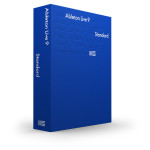
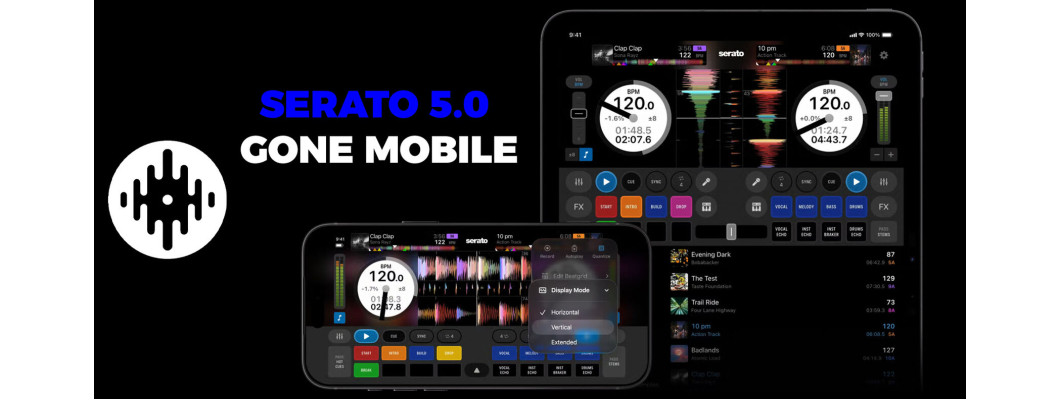
On October 19th, 2026, Serato officially launched Serato DJ for iOS, bringing the Serato experience to iPhone and iPad. The new mobile version runs on the same underlying engine as Serato DJ Pro and includes familiar elements such as decks, crates, waveforms, Stems, editable beatgrids, DVS support, streaming integration, and compatibility with more than 120 supported hardware setups. Serato
That immediately raises an important question:
Is the laptop slowly becoming optional for DJs?
Maybe not obsolete, but definitely less essential than it used to be.
From Records to Laptops to Phones
DJ technology has always evolved.
There was a time when carrying crates of vinyl was simply part of being a DJ. Then CDs became normal. Eventually laptops, controllers, USB drives, and standalone systems changed the booth again.
Now we’re reaching a point where the device already sitting in almost everyone’s pocket can potentially become part of a professional DJ setup.
Serato DJ for iOS allows users to transfer music and crates from Serato DJ Pro or Lite to an iPhone or iPad through iOS Transfer, preserving important library information as they move between devices. Serato has also brought over advanced features including Stems, Stems FX, DVS, editable beatgrids, and hardware integration. Serato
For DJs already invested in the Serato ecosystem, that is a big deal.
Instead of building an entirely separate mobile library, the goal is to make the phone or tablet another extension of the workflow they already know.
But there is something important that needs to be acknowledged.
Serato Wasn’t First — Algoriddim Already Took DJing Mobile
Serato going mobile is significant, but mobile DJing itself is not new.
Algoriddim’s djay has been operating on iPhone and iPad for years, and it has already proven that mobile DJing can go far beyond being a novelty or emergency backup. Algoriddim introduced the modern version of djay for iOS back in 2018, with hardware support, advanced mixing tools, streaming integrations, and professional performance features. Algoriddim
Today, djay offers support for professional hardware, multiple decks, turntable-style interfaces, waveforms, Neural Mix stem separation, streaming services, video mixing, production tools, Automix, and more. Algoriddim also officially supports hardware from brands including Pioneer DJ, Reloop, Numark, and Denon DJ. Algoriddim
So this is not really a story about Serato inventing mobile DJing.
It’s a story about Serato finally entering a category that Algoriddim helped establish years ago.
And that is where the comparison gets interesting.
Two Different Roads to the Same Destination
Algoriddim and Serato arrived at mobile DJing from two different directions.
Algoriddim built djay around the mobile experience itself. Its interface, touch controls, integrations, and workflow have been developed around devices like the iPhone and iPad for years.
Serato is doing something different.
Serato is taking an ecosystem already familiar to working DJs and bringing that experience onto mobile devices.
That could be one of Serato’s biggest advantages.
A DJ who has spent years organizing crates, cue points, beatgrids, and music inside Serato may not necessarily want to build another workflow just to use an iPad. If Serato can make the transition between desktop and mobile seamless, then an iPhone or iPad becomes less of a separate platform and more of another Serato device.
That matters.
For an existing Serato DJ, the appeal may not be, “Now I can DJ on an iPhone.”
It may be:
“Now my Serato library can go with me without my laptop.”
That is a very different value proposition.
Algoriddim Still Deserves Credit
At the same time, Algoriddim deserves a lot of credit for pushing this category forward before many DJs took mobile performance seriously.
djay has continued to expand its professional hardware support and performance capabilities. Its current iOS platform includes native integrations with a growing range of controllers and professional DJ equipment, along with advanced tools such as Neural Mix and extensive streaming support. Algoriddim
Years ago, DJing from an iPad might have been dismissed as something casual.
That argument is becoming much harder to make.
When professional hardware, DVS, stems, streaming, multi-deck mixing, and full performance workflows can run through a mobile device, the conversation changes.
Serato entering the market only validates that shift further.
Is the Laptop Going Away?
Probably not.
There are still plenty of reasons DJs will prefer laptops. Larger displays, deeper library management, multitasking, storage capacity, familiar workflows, and certain professional setups will continue to make computers extremely useful.
But that may no longer be the point.
The bigger change is that DJs now have more choices.
A mobile DJ could carry an iPad as a backup instead of a second laptop.
A traveling DJ might leave the computer at home altogether for certain gigs.
A beginner could potentially start learning DJ software with hardware they already own.
A working DJ could prepare music on one device and perform from another.
And in some situations, the difference between carrying a laptop bag and simply plugging in an iPad or iPhone could be significant.
Convenience Still Doesn’t Replace Skill
Whenever technology becomes easier, there is always a temptation to confuse accessibility with ability.
A smaller setup does not make someone a better DJ.
Neither does Stems.
Neither does Automix.
Neither does streaming.
Neither does having thousands of songs instantly available.
The fundamentals still matter.
Music knowledge matters.
Programming matters.
Knowing when to transition matters.
Understanding gain structure matters.
Reading a crowd matters.
Knowing professional equipment matters.
And ultimately, knowing how to control a room matters.
That doesn’t change whether the screen in front of you is 16 inches, 13 inches, an iPad, or an iPhone.
Mobile DJing Is Becoming a Real Category
That may be the biggest takeaway from Serato’s move.
The story is not simply that Serato released an app.
The bigger story is that mobile DJing is becoming too important for the major players in the DJ industry to ignore.
Algoriddim helped prove the concept.
Serato is now bringing one of the largest professional DJ ecosystems into that same space.
And once DJs can move between computers, phones, tablets, standalone systems, and professional hardware without completely changing how they work, the traditional definition of a “DJ setup” starts becoming much broader.
That could ultimately be the real evolution.
Not replacing the laptop.
Not replacing controllers.
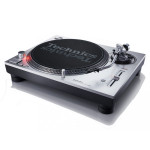
Not replacing turntables.
Not replacing standalone systems.
Instead, the DJ booth is becoming more flexible.
Final Thought
DJ technology has never stopped changing.
Vinyl became CDs.
CDs became laptops.
Laptops were joined by standalone systems.
And now phones and tablets are becoming legitimate performance platforms.
Algoriddim got there early.
Serato entering the space makes the shift even harder to ignore.
But regardless of which platform wins more users, one thing remains the same:
The equipment is only the tool.
A DJ can perform with two turntables, a controller, a standalone system, a laptop, an iPad, or now even an iPhone.
What matters is what happens when the music starts.
Because the technology might keep getting smaller.
The responsibility of the DJ to control the room does not.
Leave a Comment